When I started in web design, many moons ago, this thing called Flash came out. Designers everywhere jumped on the bandwagon, creating these amazing sites that you had to sit there and watch. They were truly stunning pieces of creativity. The problem was, no actual person was interested in waiting for a site to load just to then watch twenty seconds of "gee whizz, isn't that amazing." This, of course, was compounded by dial-up internet. The arrogance of assuming the user's time was less valuable than the designer's ego was staggering.
Today, I am seeing the exact same thing again. Designers are creating beautiful things, but ultimately, no one cares except other designers. When a visitor visits a website, they just want their intent answered. They want a fast, clean way to be delivered the solution they are looking for.
There is a reason fancy e-commerce died out, replaced by swathes of white space and clean images with legible descriptions. Of course, a website needs to represent the brand and should look good, but design-heavy sites with amazing moving and animated hero sections, and boxes that have ten hours spent getting them "pixel perfect"—hate to break it to you, but no one cares except other designers. You are building monuments to your own vanity, not conduits for commerce.
I said today that I wish there were a wiki whereby every new young person entering the industry could read and get up to speed on the realities of the sector. Because the disconnect between the "creator class" and the actual, living, breathing consumer is vast and growing wider by the minute.
The SEO world is full of noise and recycled advice. This guide brings clarity. The SEO Founders’ User Guide is built from lived experience in the field — helping you cut through the chaff and find your green pastures.
"You spent 6 months building. Now you need 5 paying customers by tomorrow. No audience. No ads. No connections. How do you actually make it happen?" Someone asks on socials, and you see millions of these pointless, hand-wringing questions.
"By not making the first mistake. You did not create a waiting list. Did not validate the idea. Did not build an early adopter audience. Fix that mistake, and you don't have these issues," I said. It is fantastic that today, more than at any time in history, people can make their own way in life. Sure, I would be the first to admit that in some ways it is harder today with house prices and the uncertainty of the job market. However, at the same time, it is an amazing time to be alive. The tools are there, yet the fundamental understanding of human nature is utterly absent.
Yet, with all this knowledge a finger click away, there seems to be a massive disconnect between what businesses want, need, and desire. Here is another prime example of this absolute delusion.
"Just created this badge as a component in Etch. I feel like it's time we start implementing this type of thing, as consumers need specific trust signals in this area. My thought is that you link this badge to an 'AI Statement' on your website that details your use of AI, philosophy on AI, and the degree to which AI is involved in your site and projects. If I had to guess, consumers will very much flock towards brands, products, and sites that display a badge like this and back it up with an official statement. Thoughts?"
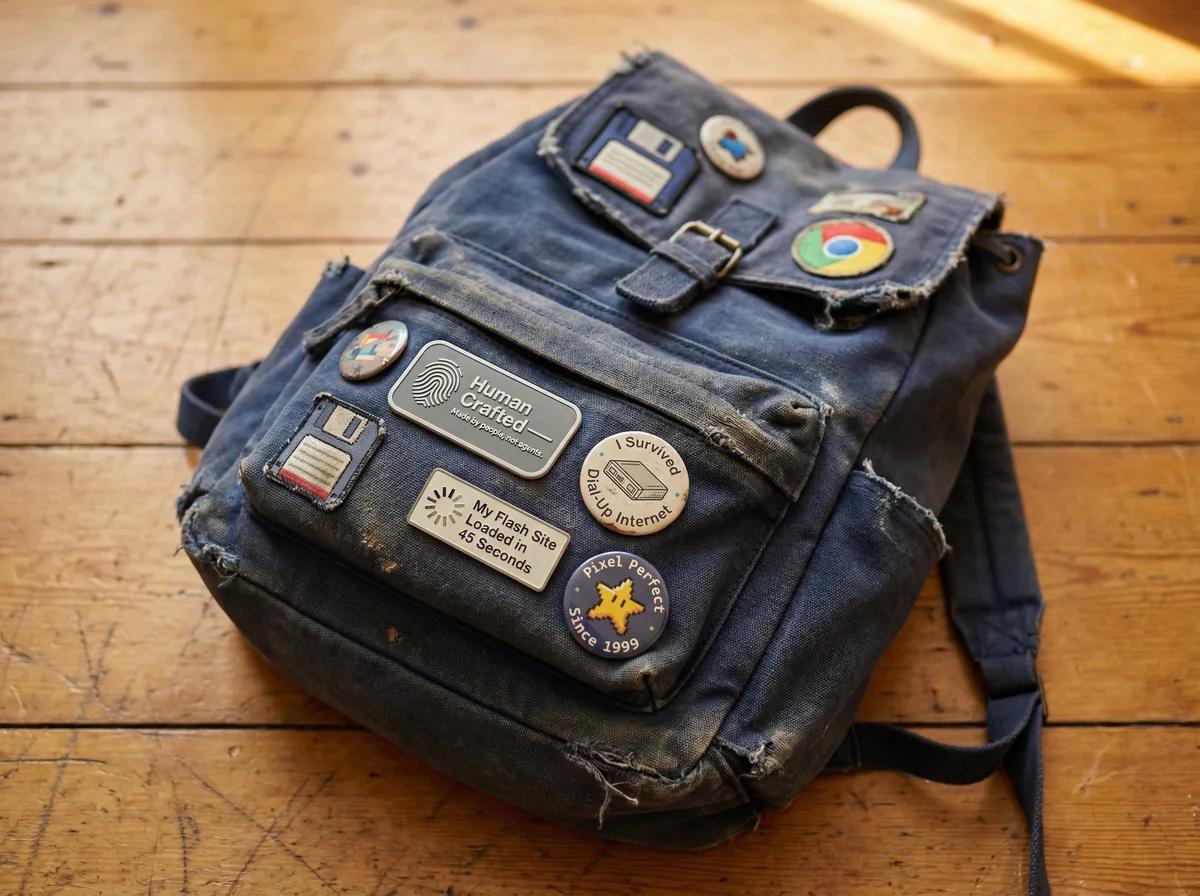
The badge in question? "Human Crafted: Made by people, not agents."
And you think people will care, why exactly? I code, and I use AI. What an end user cares about is a solution to their problem. They do not care if a mouse, a chicken, or an AI agent wrote the code. In fact, they won't even ask. Most of the time, they have very little time to even care, and they just want the XYZ problem fixed with minimum interaction and stress.
I said exactly this, and it was met with a rather derogatory reply: "Why don't you put the opposite badge on all your sites then?"
"Badges are for school bags, not business assets," I said. Never mind he asked for feedback, then got his nose right out of joint. If you don't want feedback, just a stroking of your fragile ego, then don't ask for feedback, snowflake.
This whole "Human Crafted" nonsense is just the latest iteration of the 95% trying to manufacture a moral high ground out of their own inefficiency. It's the modern equivalent of those "Hand-coded in Notepad" badges from the late nineties. It is pure, unadulterated culture soup.
Let me let you in on the secret sauce, the reality that academia and these design bootcamps conveniently gloss over: the consumer does not give a damn about your process. They care about the result. They are navigating a complex ecosystem of their own lives, looking for a frictionless path to a solution. If an AI agent can build a more robust, faster, cleaner solution than a human spending three weeks "crafting" it, the consumer will take the AI solution every single time. Because business is about people, yes, but it is about serving people, not demanding they applaud your archaic methods.
This desperate clinging to the "human touch" in areas where the human touch only adds delay and error is not a trust signal; it's a warning sign. It says, "We prioritise our own romanticised view of our labour over delivering value to you." It is the "pixel-perfect" Flash animation of 2026. A beautiful, sedulous waste of time that completely misses the point of why the user showed up in the first place.
So, stick your badges on your school bags, go back to your echo chambers, and leave the actual building of solutions to those of us who understand that the ultimate "trust signal" is simply delivering what you promised, when you promised it, without making the customer wait for your ego to finish loading.